AI in Recruitment
How to Use AI for Recruiting (When You're Not an Expert)
AI makes hiring faster and better, even without technical skills. Identify your pain points, judge the systems on the right five things, and phase it in.
Remo Vloet10 min.
From CV screening to candidate matching: 11 AI applications recruiters already use daily. With practical tips to get started right away.
AI is one of the most discussed topics in recruitment. At conferences, in trade publications, and on LinkedIn, the possibilities are constantly being explored. But there’s a gap between the hype and reality.
What can AI actually do for you as a recruiter? Not in theory, but in your daily work. In this article, we cover eleven concrete applications that are available right now, with real-world examples.
Instead of manually scrolling through dozens of resumes, AI-powered CV parsing automatically analyzes all incoming applications. The system compares skills, experience, and education against job requirements and presents you with a ranked list.
The advantage isn’t just speed. AI doesn’t miss details. Where you might read less carefully after the twentieth resume, the system stays consistent. That’s especially useful at high volumes, like a staffing agency processing hundreds of applications weekly.
Important: AI doesn’t replace your judgment. It filters and ranks, but you decide who gets invited.
The best candidates often aren’t actively looking. AI-powered sourcing tools scan professional networks, job boards, and social media to find qualified profiles that match your search criteria.
Where you’d spend hours on manual Boolean searches, AI finds relevant matches in seconds. You then decide who to approach and how. The tool does the searching, you do the people work.
This is one of the applications with the biggest immediate impact. AI transcription and summaries automatically process your conversations into structured reports. After an intake or interview, you receive a summary with the key points, competencies, and agreements.
The difference from traditional note-taking apps: the summary isn’t generic. With customizable interview profiles you decide which information gets highlighted. An IT staffing intake requires different data points than a conversation at a financial consultancy.
And perhaps more notably: you no longer need to write during the conversation. You can fully focus on the candidate.
Well-implemented chatbots answer frequently asked questions about the application process, job details, and the company. They’re available 24/7 and take over simple communication tasks.
The key is expectation management. A chatbot pretending to be human backfires. A chatbot that clearly communicates what it can and can’t do, and refers you to a recruiter at the right moment, adds value.
Coordinating schedules between candidates, hiring managers, and recruiters often takes more time than the interview itself. AI-powered scheduling tools coordinate availability and send automatic confirmations and reminders.
The result: fewer no-shows, less back-and-forth emailing, and more time for the work that actually matters.
Using data from previous hires, AI can identify patterns that predict which candidates are likely to succeed and stay longer. This helps you make better selection decisions.
A caveat: predictive models are only as good as the data they’re trained on. If your historical data contains biases, the model reproduces them. Looking critically at your data is just as important as using the tool.
Many agencies have their own house style for resumes they send to clients. AI-powered CV formatting automatically converts candidate resumes to your format, including language correction and consistent styling.
This doesn’t just save time, it also improves your presentation quality. A professionally formatted resume makes a better first impression with your client.
AI keeps candidates informed with personalized updates about their application status. Automatic status notifications, feedback moments, and timely communication reduce uncertainty and improve the experience.
In a tight labor market, candidate experience isn’t a nice-to-have but a competitive advantage. Candidates who have a good experience are more likely to reapply and recommend you to others.
AI can help limit unconscious bias by anonymizing resumes and suggesting neutral language in job descriptions. With transparency features you can also verify what information an AI decision is based on.
This isn’t a magic solution. AI systems can contain biases too. But when you deliberately use it as a complement to human judgment, it reduces the chance of discrimination in your selection process.
AI analyzes hiring trends, internal data, and market information to predict future staffing needs. This allows you to recruit proactively rather than reactively.
For larger organizations and agencies that recruit for multiple clients, this is a way to spot seasonal peaks and structural shortages earlier.
AI tools structure what gets said in your conversations, so your dashboards show how hiring is actually going. Which topics keep coming up across intakes? Where in the process do candidates drop out? Are there patterns in successful placements?
This data helps you improve not just individual conversations but your team as a whole. With a best-practice library you share the insights of your best recruiters with the entire team.
The eleven applications above sound promising, but what do they concretely deliver? Let’s make it practical.
Time savings
The average recruiter spends 40% of their time on admin: writing up notes, entering data, formatting resumes, coordinating schedules. AI takes over most of these tasks. For a team of five recruiters, that’s roughly 40 hours per week freed up for higher-value work.
Faster placements
Through faster conversation processing and automatic data entry, you shorten the time from first contact to placement. In a tight labor market, that speed is the difference between a placement and a missed candidate.
Better data quality
AI makes fewer mistakes than humans in data entry. Automatic extraction and validation ensures your CRM stays current and reliable. No duplicate records, no outdated information, no missing fields.
More consistent quality
Human performance fluctuates. Your first conversation of the day goes differently than your sixth. AI delivers the same quality on the first conversation as on the hundredth. That creates a more even process and a better candidate experience.
Using AI doesn’t automatically mean success. A few pitfalls to avoid:
Trying to do too much at once
Don’t start with five AI tools simultaneously. Pick one application, implement it properly, measure the results, and then build from there. A step-by-step approach works better than a big bang.
Forgetting the human factor
AI is a tool, not a replacement. If your team feels like AI is taking over their jobs, you’ll face resistance. Communicate clearly that AI takes over the boring work so they can focus on the interesting work.
Not providing training
A tool is only as good as the people using it. Invest time in training your team. Not just on how to use the tool, but also on interpreting the results.
Choosing the wrong tool
Not every AI tool fits every organization. Choose a solution that integrates with your existing systems and is specifically built for recruitment. Adapting a generic tool often costs more than it delivers. Read more about why custom AI is often a mistake.
Start small
Pick an application that has immediate impact on your daily work. For most recruiters, that’s automatic conversation processing: it saves time right away and you notice the difference from day one.
Choose a tool where the AI and the candidate data sit together
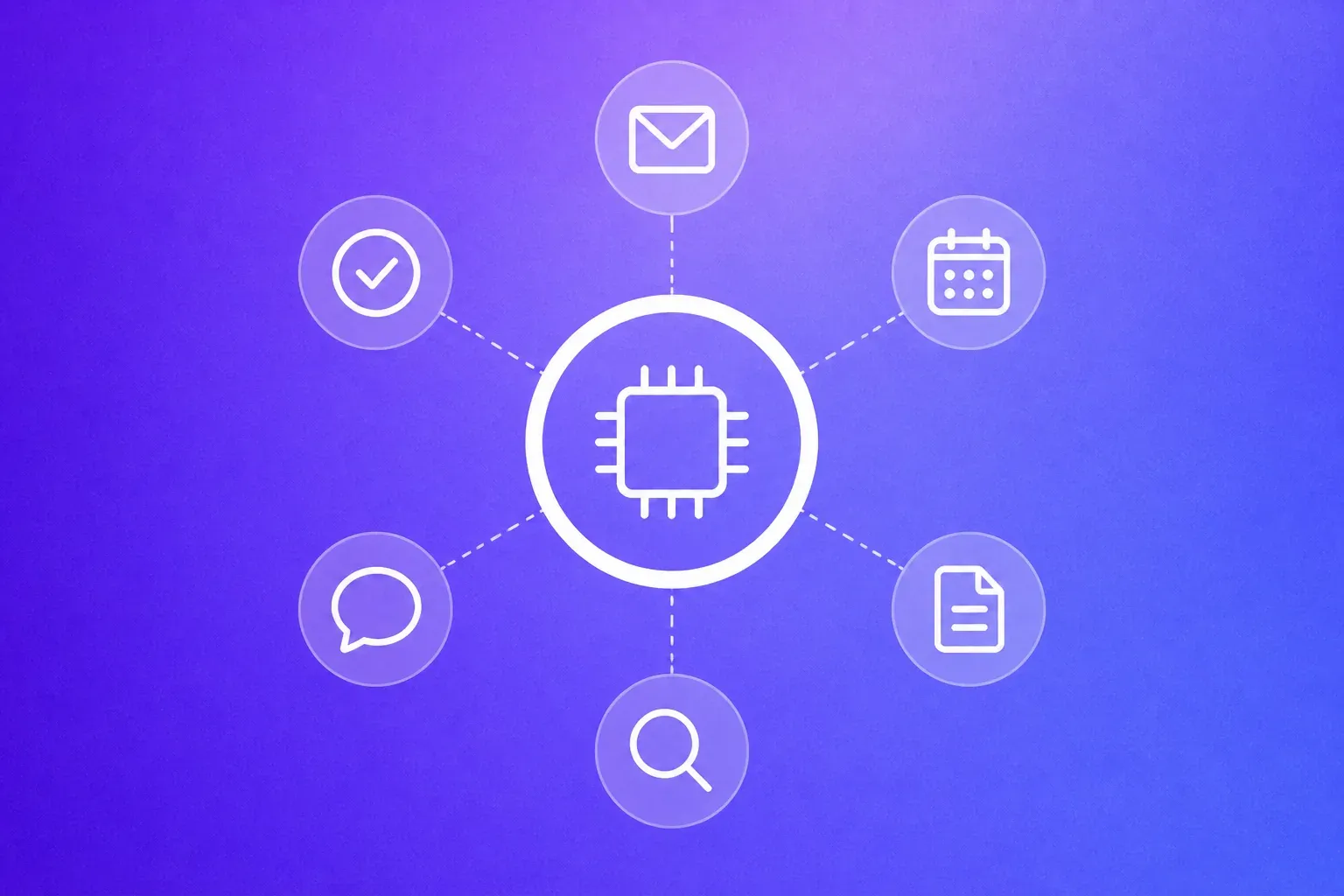
AI that sits beside the system your candidate data lives in creates more work instead of less, because somebody still has to copy the output across. Pick a tool that writes straight to the candidate record, with connectors for mail, calendar, meetings and chat around it.
Measure the results
Track how much time you save, how much faster you place, and how data quality changes. That way you build the business case for further expansion.
Keep the human at the center
AI supports you, but doesn’t replace you. It takes over admin and data processing, so you can focus on what you do best: building relationships and finding the right match.
About the author

Remo Vloet is a co-founder of Simply, the AI Operating System for recruitment agencies: inbox, meetings, sourcing, CV parsing, search and matching, documents and automation in one system. With a background in building complex software, he contributes to the technical vision behind Simply.
LinkedInArticles by Remo VloetAI makes hiring faster and better, even without technical skills. Identify your pain points, judge the systems on the right five things, and phase it in.
Remo Vloet10 min.

Find out how Simply can completely evolve your workflow.No slides, just product.